A status page that never leaves your infrastructure.
Stop answering “is it down?” at the helpdesk. One Rust binary, on your own server.
View the source AGPL-3.0
- 1 binary to deploy
- 1 file on disk
- 0 services beside it
- 0 calls to anyone else
What a hosted status page cannot say
Four facts, no asterisk-
One binary, one file
Rust and SQLite compiled together. Nothing else to run, back up or patch.
-
Your data never moves
Services and incidents live on your own disk. Nobody else holds a copy.
-
Nothing loads from elsewhere
Fonts and assets ship inside the binary, under a strict content security policy.
-
AGPLv3, and it stays that way
Public source. The licence keeps it public for whoever redistributes it.
What it does today
Already in the binary, not on a roadmap- Service health
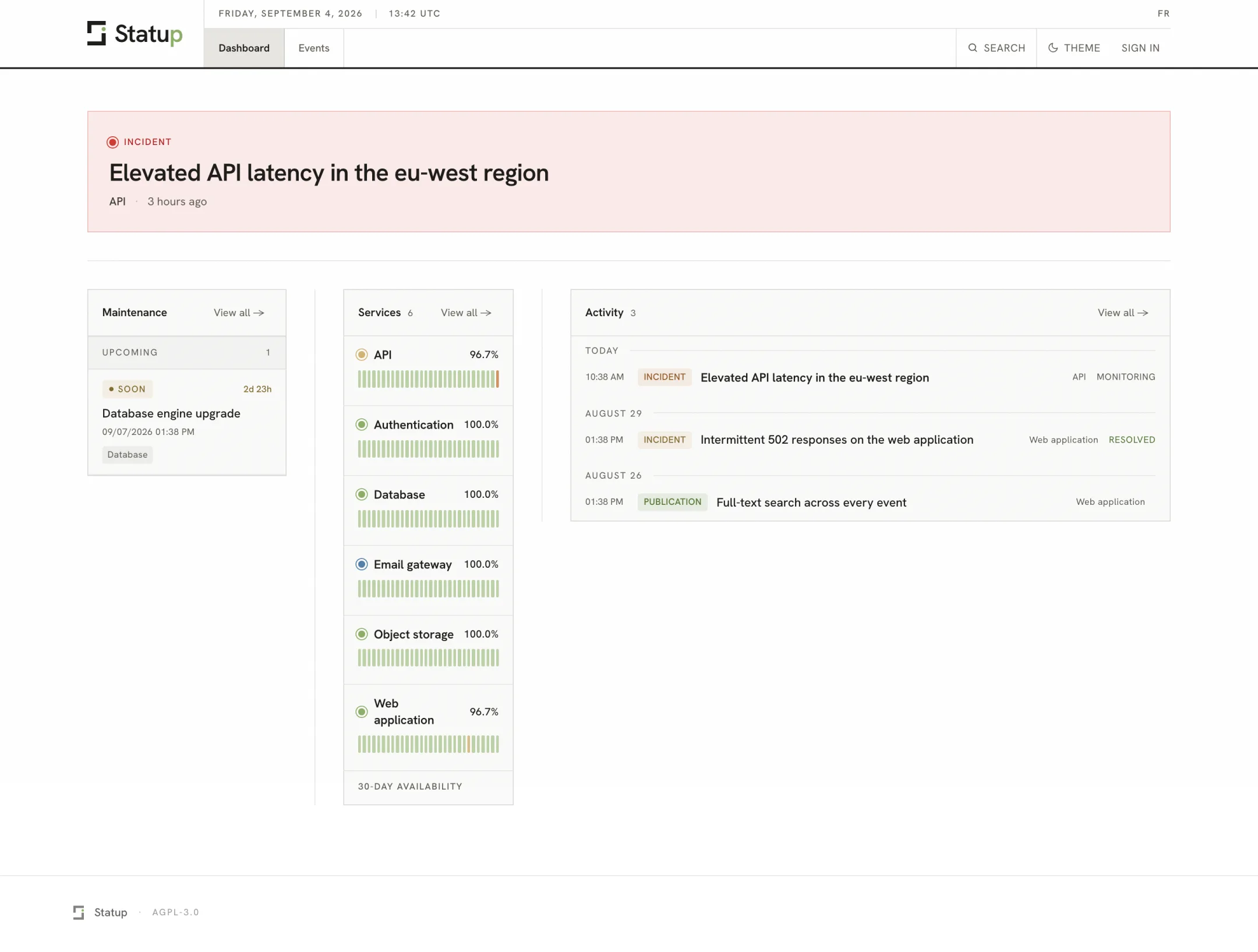
- A status and thirty days of history, per service.
- Incidents
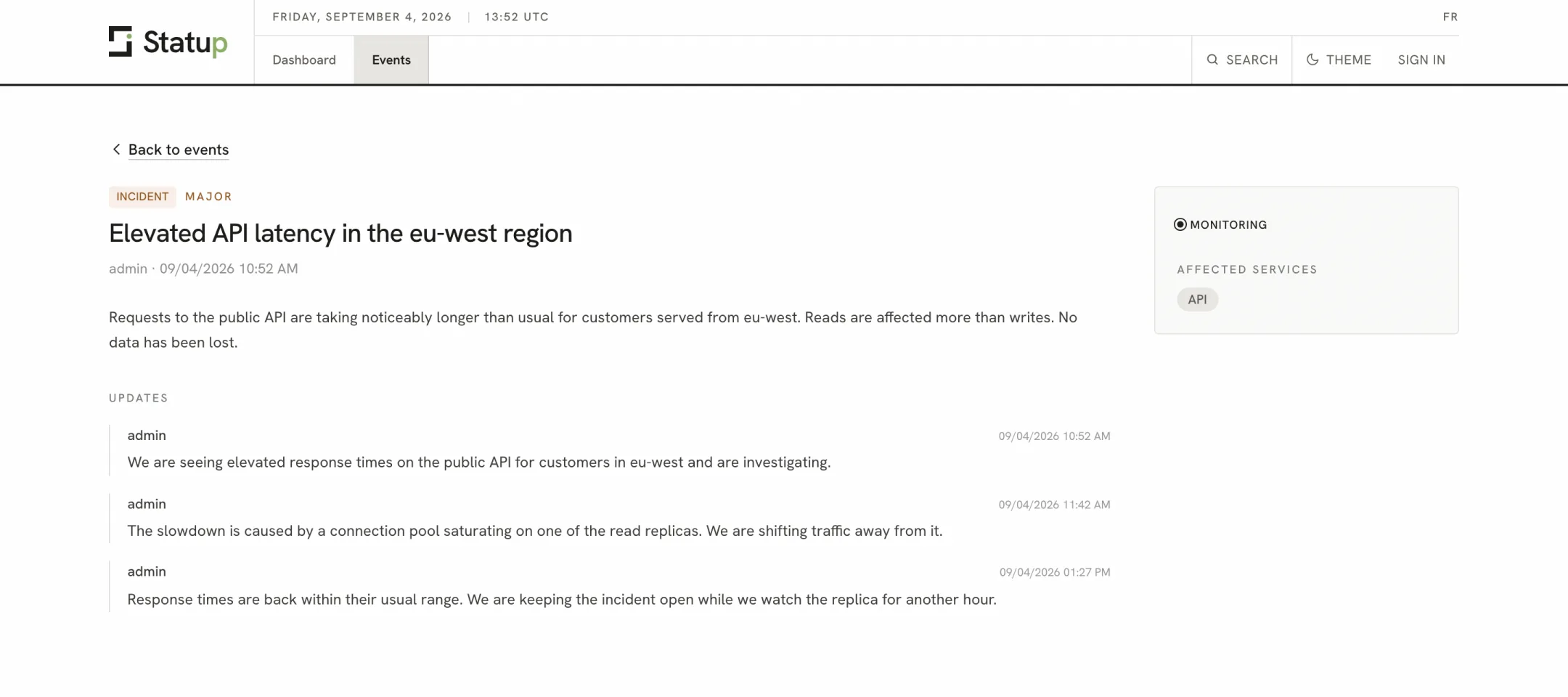
- Declare, update as you learn, resolve. The timeline stays.
- Maintenance
- Announce the window before it starts, with a countdown.
- Changelogs
- Not just up or down. What changed, and when.
- Full-text search
- “When did we last update Sage?” Answered in one query.
- Three roles
- Reader, Publisher, Admin. Guest access optional.
- Two languages, two themes
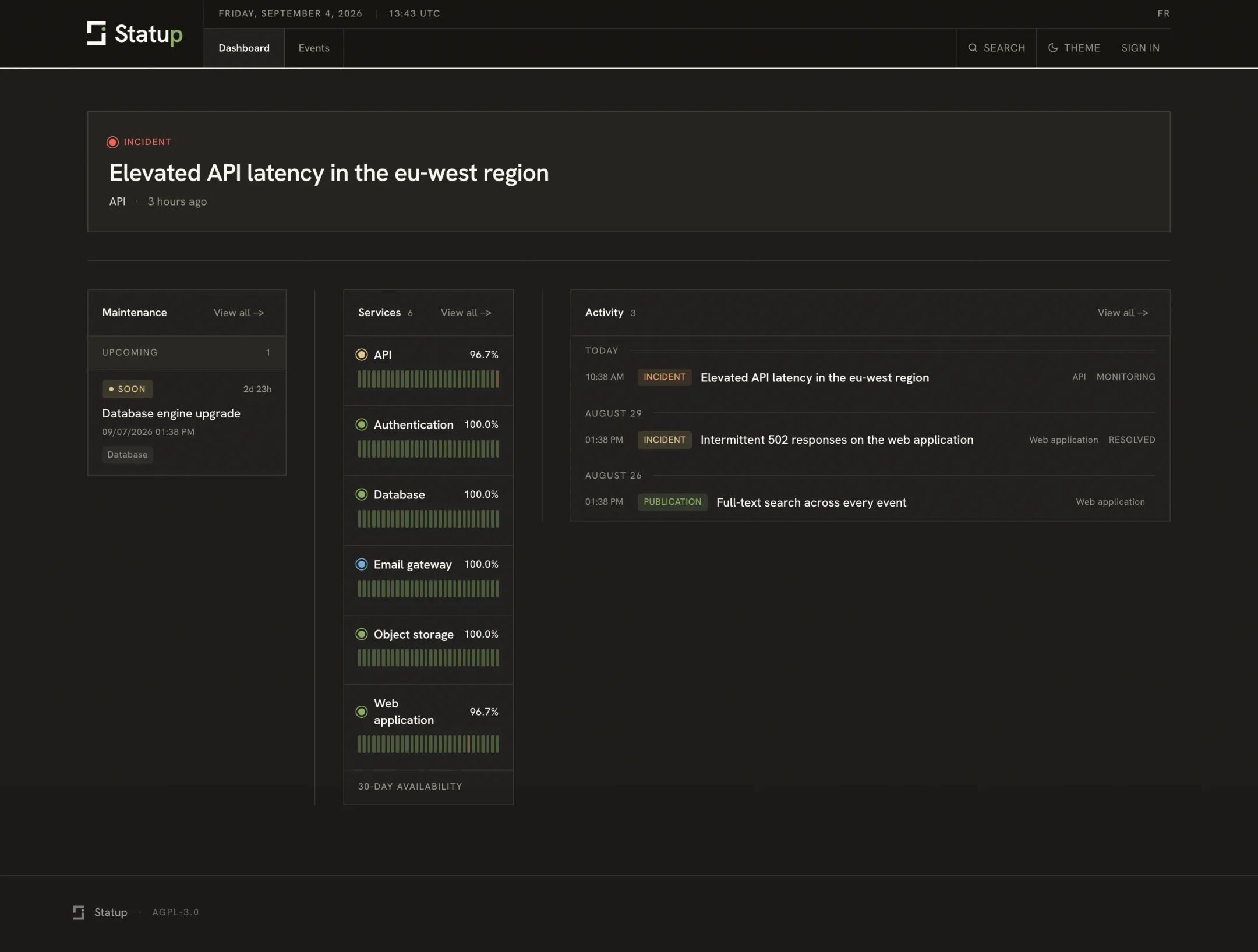
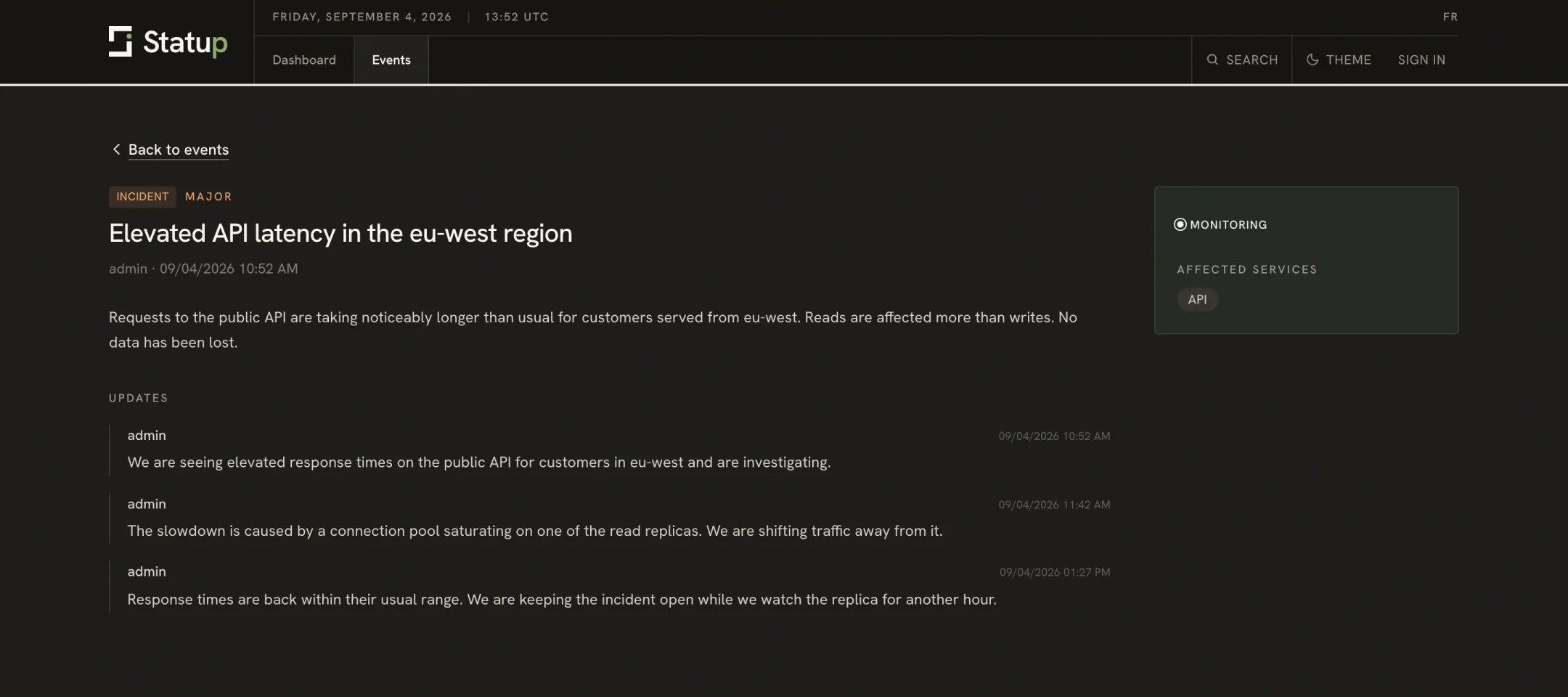
- French and English, light and dark.
- Accessible
- WCAG AA, visible focus, never colour alone.
Built for the person who is not an engineer
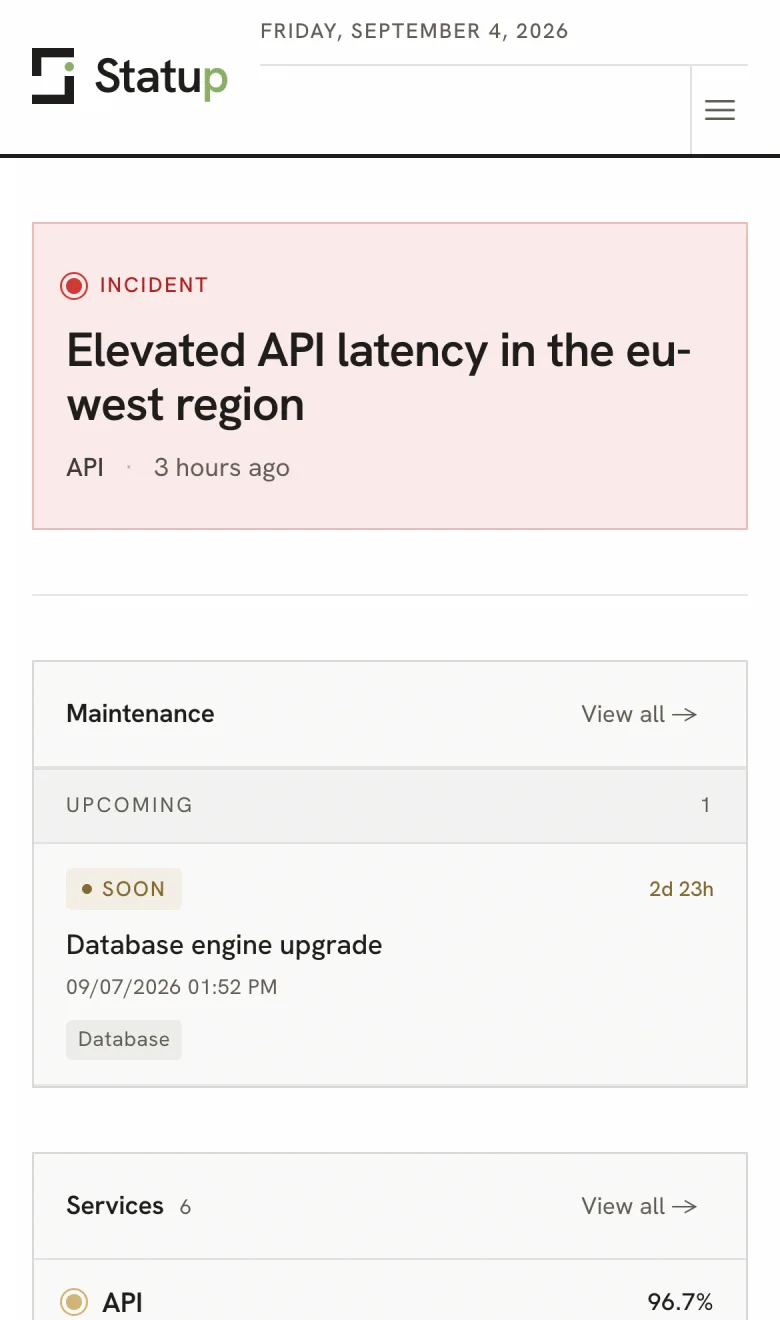
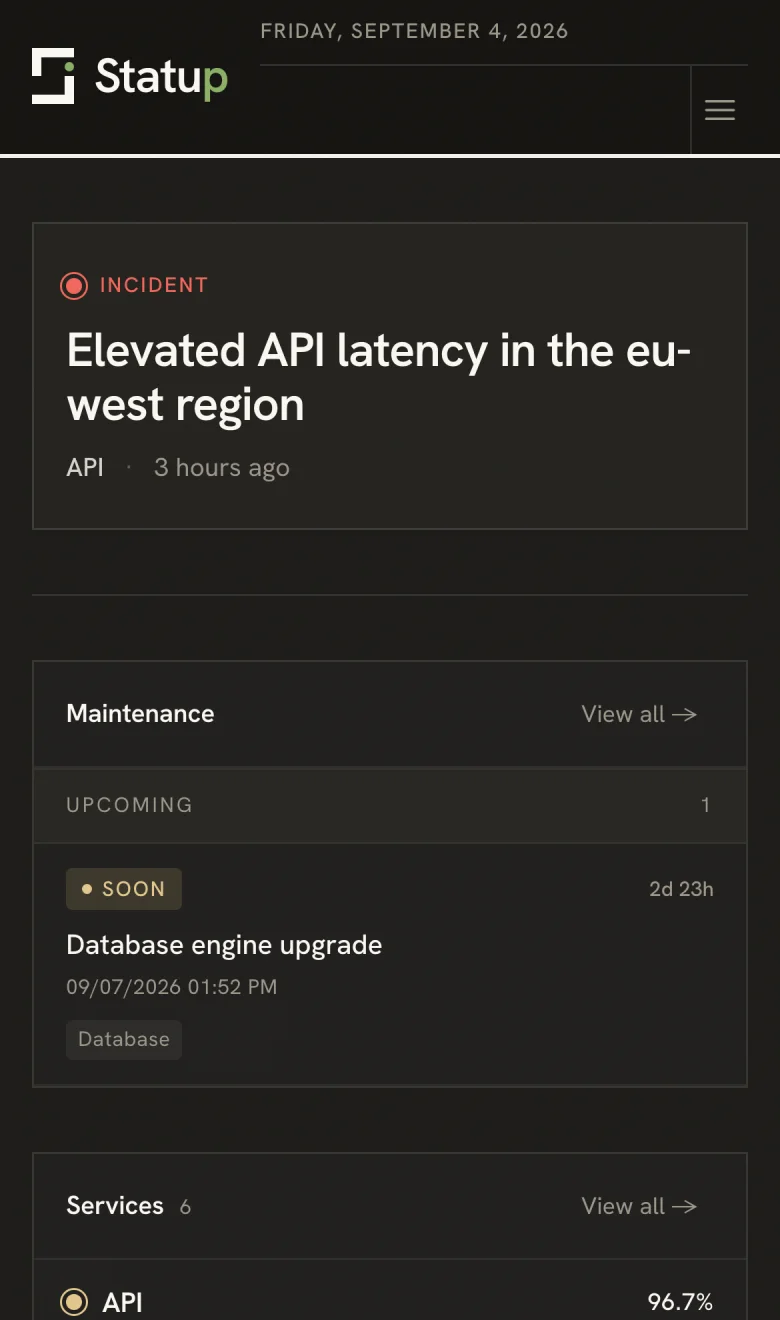
The two-second testThey arrive from a link in a support channel, on a phone, already annoyed. They have one question.
So a major incident is legible at arm’s length, and every coloured state carries a written label beside it. That is why the page is almost entirely neutral when nothing is wrong.
What it does not do yet
Better here than after you deploy it-
Notifications
None yet. Email, webhooks and feeds are the largest gap before v1.
-
Unproven in production
It has never run a full week on real infrastructure under real incidents.
-
Self-hosting only
There is no hosted version, and statup.dev serves this page alone.
-
The schema still moves
Expect migrations and reworks before the first stable release.
Running it
Docker, or build from source- Runtime
- One binary. Docker and compose files in the repository.
- Storage
- Embedded SQLite, one file. No database server.
- Config
- One .env. Only the session secret is required.
- Licence
- AGPL-3.0.
Questions
- Is it free?
- Yes, under the AGPL-3.0. Run it, read it, change it. Redistribute a modified version, or offer it over a network, and the same licence applies to your changes.
- Does it need a database server?
- No. SQLite is embedded in the binary and writes to a single file.
- Does it send anything to statup.dev?
- No. No telemetry, no update check, no third-party font or asset request at runtime.
- Is this the older Statup?
- No. An unrelated status page called Statup, written in Go, has been unmaintained for years. This one is a different codebase, written in Rust, started in 2026.
One repository away.
Nothing to sign up for, nothing to pay. Clone it and judge for yourself.